Introducing Microservices Design Patterns in .NET (2nd Edition)
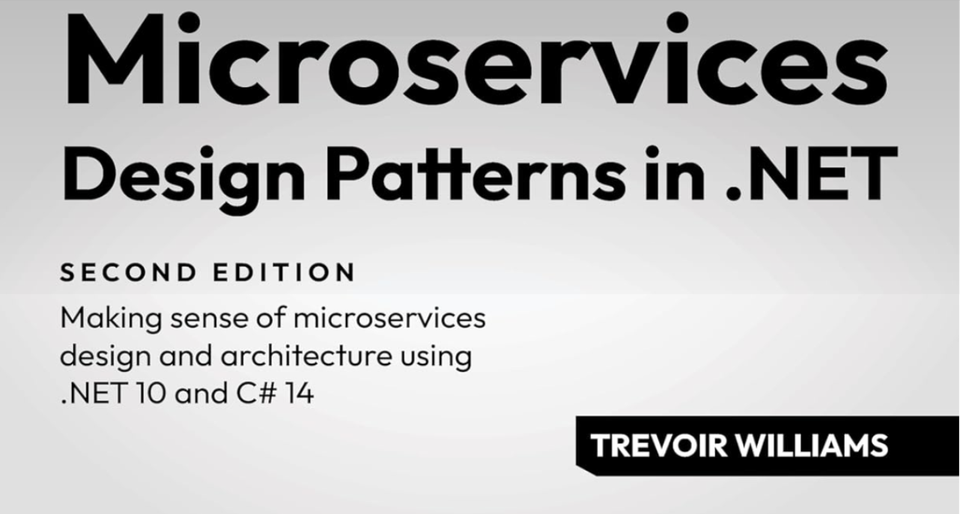
After months of writing, revising, and pressure-testing ideas against real-world systems, I’m excited to officially announce the release of the Second Edition of Microservices Design Patterns in .NET.
This edition is more than an update—it’s a substantial evolution of the original book, shaped by years of production experience, community feedback, and the realities of building distributed systems at scale.
Why a Second Edition?
Microservices architecture has matured.
.NET has matured.
And the expectations placed on modern systems have increased dramatically.
Since the first edition, we’ve seen:
- A shift toward cloud-native and container-first architectures
- Increased adoption of event-driven systems
- A stronger emphasis on resilience, observability, and operations
- The rise of CQRS, sagas, and asynchronous messaging as practical necessities—not academic patterns
This second edition reflects those changes. It focuses on what actually works in production, not what looks good in diagrams.
What This Book Covers
Microservices Design Patterns in .NET (Second Edition) is a practical, production-focused guide to designing and implementing microservices using modern .NET.
Rather than presenting patterns in isolation, the book explains:
- Why patterns exist
- When they help—and when they hurt
- How to implement them safely in real systems
You’ll find coverage of:
- Domain-Driven Design and service boundaries
- Synchronous vs asynchronous communication
- CQRS, event sourcing, and saga patterns
- Event-driven architectures
- Resilience patterns (timeouts, retries, circuit breakers)
- API Gateway and Backend-for-Frontend (BFF) patterns
- Micro frontends
- Observability with OpenTelemetry
- Security considerations and zero-trust concepts
- Containerization, Kubernetes, and deployment concerns
Everything is framed around real engineering trade-offs, not idealized architectures.
What’s New in the 2nd Edition
This edition has been fully revised and expanded, including:
- Updates for .NET 10 and C# 14
- Expanded chapters on resilience and reliability
- Deeper, more practical treatment of CQRS and event sourcing
- Modern guidance on API gateways, BFFs, and frontend integration
- New content on serverless and sidecar patterns
- A stronger emphasis on observability, monitoring, and operations
- Clearer guidance on when not to use microservices
If you read the first edition, this one will feel familiar—but noticeably more mature and grounded.
Who This Book Is For
This book is written for:
- .NET developers building or migrating to microservices
- Software architects designing distributed systems
- Senior engineers responsible for reliability and scalability
- DevOps and platform engineers supporting microservices in production
It assumes working knowledge of C# and ASP.NET Core and focuses squarely on architecture and system design, not beginner-level syntax.
Why I Wrote This
I wrote this book for the same reason I build courses and write content:
to help engineers avoid costly mistakes and make informed architectural decisions.
Microservices can be powerful—but they can also introduce unnecessary complexity when applied blindly. This book is about clarity, discipline, and sustainability in distributed systems.
Get the Book
The Second Edition of Microservices Design Patterns in .NET is now available:
👉 Buy on Amazon
https://www.amazon.com/dp/1837027412
If you’re designing, building, or maintaining microservices in .NET, I believe this book will save you time, frustration, and rework.
What’s Next
Over the coming weeks, I’ll be sharing:
- Companion articles expanding on key chapters
- Architecture walkthrough videos
- Related course content and examples
- Practical demonstrations of patterns from the book
If you’re subscribed here, you’ll get those updates directly.
Thank you, as always, for your continued support and for being part of this community.
— Trevoir Williams
Member discussion